
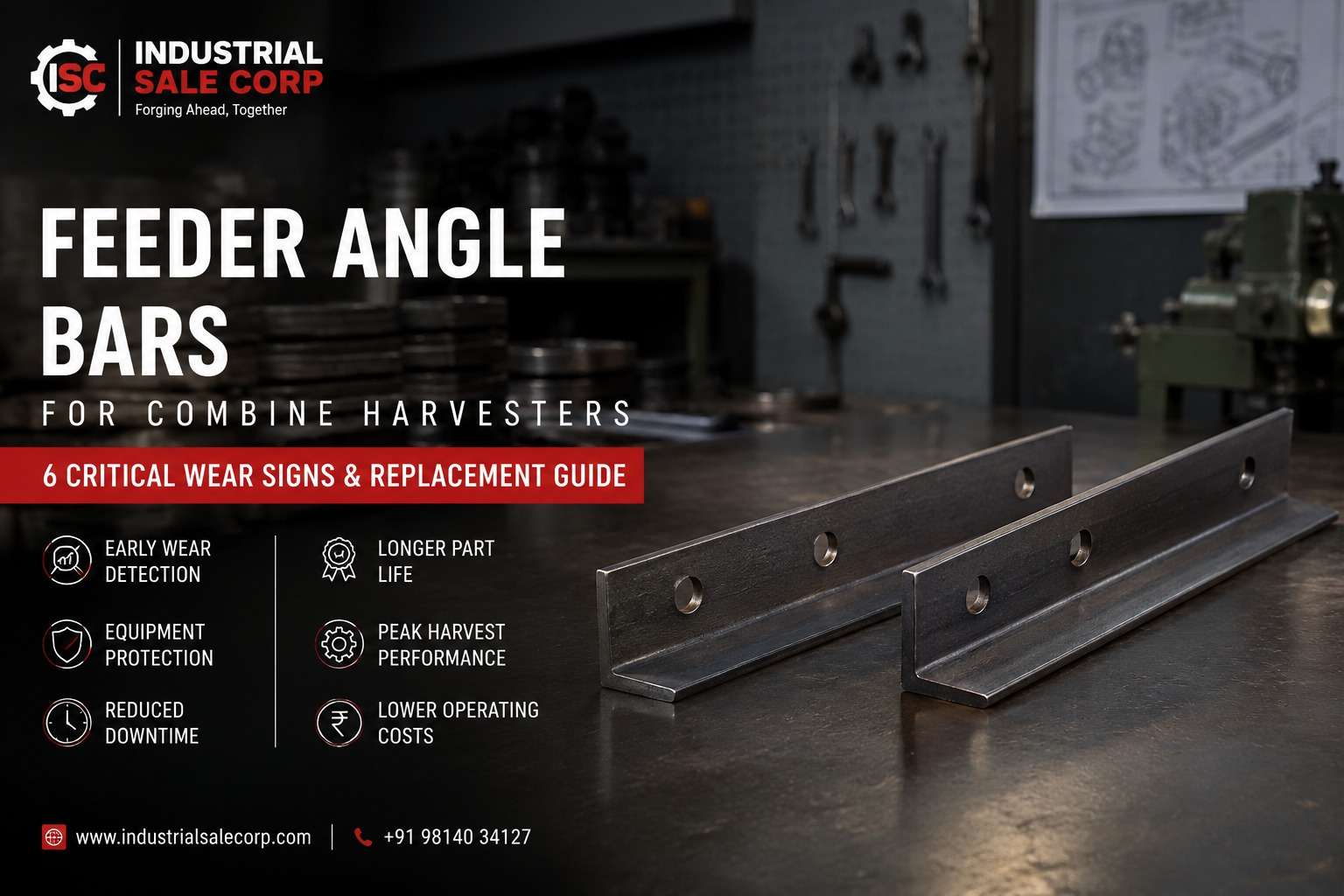
Feeder angle bars for combine harvesters take a beating every harvest season. A combine that starts feeding unevenly into the cylinder usually gets blamed on the auger or the header first, but just as often the real culprit is smaller and less obvious: angle bars bolted across the feeder house chain, worn down to the point where they’re no longer gripping the crop mat the way they should.
📋 In This Guide
How Feeder Angle Bars for Combine Harvesters Actually Work
Feeder angle bars — sometimes called feeder chain slats or feed bars — are mounted in rows across the feeder house chain. As the chain carries the crop mat up from the header toward the threshing cylinder or rotor, the angled face of each bar grips the material and drives it forward at a steady rate instead of letting it slip or bunch. That even flow matters downstream too: a feeder house that’s feeding cleanly puts a more consistent load on the rasp bars and concave, which is a big part of why those parts last as long as they do.
6 Signs It’s Time to Replace Them
| Sign | What’s Actually Happening |
|---|---|
| Bent or twisted bars | The angled face no longer grips square, so crop slips instead of being driven forward |
| Cracked or broken bar sections | Material bypasses the damaged section, and losses climb without a clear header cause |
| Rounded-off leading edge | Constant crop and grit contact has worn the gripping edge smooth |
| Chain slap or rattle at operating speed | Often a stretched chain or bars that have worked loose at the mounting bolts |
| Elongated bolt holes | Bars shifting under cyclic load, which usually ends in a lost bar mid-harvest |
| Uneven feeding into the cylinder | Visible bunching or gaps in the mat, frequently blamed on the header instead of the feeder house |
Quick tip: Replace feeder angle bars a full chain section at a time rather than one at a time — mixing worn and new bars on the same chain keeps the feed pattern uneven even after the repair.
Materials That Hold Up Best Under Constant Load
Forged feeder angle bars outlast stamped or pressed steel versions because forging keeps the grain structure of the metal intact through the bend, right where the gripping edge takes the most abuse. That translates into an edge that stays square longer instead of rounding off, and bolt holes that hold their shape instead of stretching under the constant start-stop cycling of a full harvest season — the same reason forging is the standard for high-wear combine harvester components generally, not just feeder bars.
Ordering a Feeder Angle Bar Set Without a Mismatch
Bar length, bolt spacing, and the angle of the gripping face all vary by chain pitch and header brand, so the safest way to order is against the OEM part number rather than a generic straight bar. Distributors who also stock rasp bars for combine harvesters have a good reason to check both at once — a feeder house that’s feeding unevenly is one of the fastest ways to accelerate wear on the rasp bars sitting right behind it.
FAQ
Can a bent feeder angle bar be straightened instead of replaced?
Straightening works as a short-term fix, but the bend point has already lost some fatigue strength and tends to fail again sooner than a new forged bar would.
Do feeder angle bar dimensions vary between header brands?
Yes — bar length, bolt spacing, and mounting angle differ by chain pitch and header model, so parts should be matched to the OEM part number rather than a generic listing.
How often should feeder angle bars be inspected?
Most operators check them during the same pre-harvest inspection as the rasp bars and concave, since worn angle bars are one of the more common hidden causes of accelerated rasp bar wear.
Industrial Sales Corporation forges feeder angle bars for combine harvesters to OEM cross-reference specs, supplying distributors who need consistent bar geometry across full feeder-house replacement orders.