
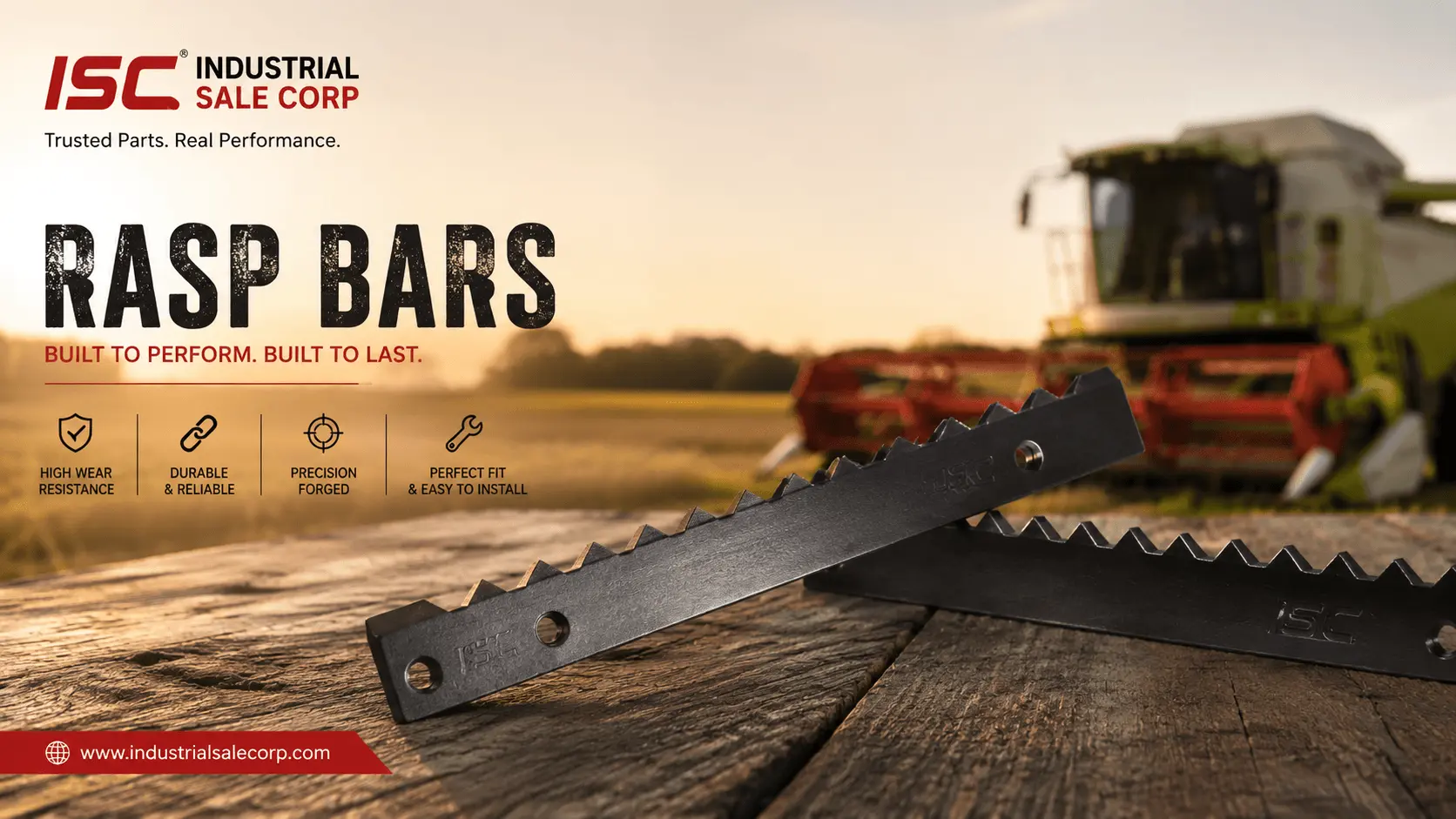
You’ll usually notice it first at the yield monitor, not on the drum: grain loss creeping up a little more each day of harvest, with nothing else on the combine changed. Nine times out of ten, the culprit is rasp bars for combine harvesters that have quietly worn past their working profile. Here’s how to read the signs before they cost you a full field’s worth of grain.
📋 In This Guide
The Job a Rasp Bar Actually Does
Bolted in a spiral around the threshing drum, rasp bars for combine harvesters grip crop material as the drum spins and rub grain loose from the stalk without crushing it. The raised ribs are doing the gripping; once they round off, the drum starts to slip against the material instead of threshing it, and that slip shows up downstream as loss, not as anything obviously wrong with the machine.
Reading Rasp Bar Wear Before It Costs You Grain
Most operators catch wear too late because they’re looking for a dramatic failure instead of a gradual drift. This table is what an experienced combine mechanic actually checks:
| What You Notice | Likely Cause | What To Do |
|---|---|---|
| Grain loss rising with no change in speed or crop | Ribs rounded past grip threshold | Measure rib height against spec with calipers |
| More unthreshed heads out the back | Bar profile no longer matches crop | Check profile against crop type, not just wear |
| New vibration at drum speed | Uneven wear across the bar set | Inspect every bar, not just the accessible ones |
| Hairline cracks at rib base | Fatigue in cast or under-hardened steel | Replace immediately — cracked bars can shear off |
| Rising fuel burn per acre | Drum working harder to compensate for slip | Cross-check against rasp bar thickness spec |
Profile Matters as Much as Steel Grade
Standard rib bars suit general cereal crops, angle bars grip tougher maize stalks, and low-profile bars reduce grain cracking on delicate crops like rice. Buying rasp bars for combine harvesters purely on hardness numbers, without checking the profile matches the crop mix a farm actually runs, is one of the more common — and avoidable — sourcing mistakes distributors make.
Why You Replace the Full Set, Not One Bar
Swapping a single worn bar into an otherwise-used set introduces a height mismatch around the drum, which shows up as new vibration even though every individual bar is “fine.” Full-set replacement of rasp bars for combine harvesters keeps the drum balanced and is the standard recommendation from every OEM service manual for exactly this reason.
Sourcing: What Separates a Good Forged Bar From a Bad One
Forged rasp bars hold rib geometry longer than cast alternatives because forging aligns the steel’s grain structure with the part’s shape, which resists the fatigue cracking that typically starts at the base of each rib — read more on why that matters in our hot forging vs cold forging breakdown. A reliable combine harvester parts exporter should hand over hardness test results per batch without being asked twice.
Buyer tip: Ask for the rib hardness spec in writing before ordering rasp bars for combine harvesters in container volume — a supplier that hesitates on this is telling you something.
FAQ
How often should rasp bars for combine harvesters be replaced?
Most operators replace a set every 800–1,500 threshing hours, though this varies heavily with crop type and moisture conditions at harvest.
Can rasp bars be resharpened instead of replaced?
Some shops resurface worn ribs, but this is a short-term fix — forged replacement bars restore full grip and last considerably longer.
Do all combine harvester brands use the same rasp bar profile?
No. Profile, length, and bolt pattern vary by brand and drum diameter, so bars should always be ordered against the OEM part number.
Worn rasp bars quietly cost more in lost grain than most farms realize until they check the numbers against last season. If your loss monitor has been drifting upward, a full rasp bar inspection before next season is worth the hour it takes.