
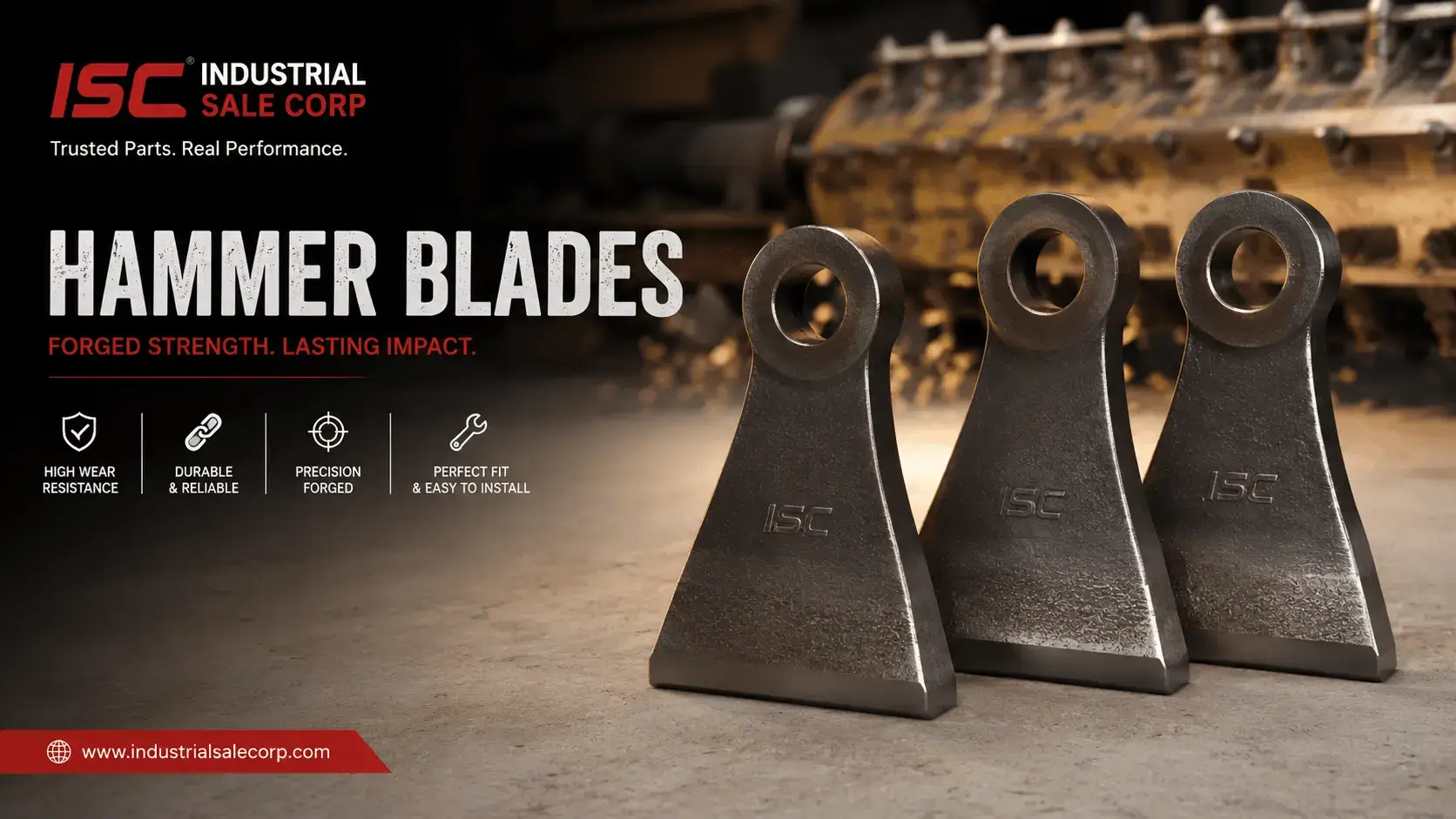
Hammer blades for combine harvesters take more abuse than almost any other wear part on the machine — thousands of impacts per minute against grain, stalk, and the occasional stone, hour after hour through the season. Choosing the right hammer blades, and knowing when to replace them, has a direct effect on threshing quality, fuel consumption, and how often your machine sits idle for repairs. This guide covers the types, materials, wear signs, and buying considerations that matter most for distributors and importers sourcing hammer blades for combine harvesters.
What Hammer Blades Actually Do
Inside the threshing or hammer mill section of a combine harvester, hammer blades are mounted on a rotating drum and strike incoming crop material at high speed. The impact separates grain from stalk and husk, breaks down residue, and feeds material toward the cleaning shoe. Because the blades are doing the physical work of separation, their shape, edge condition, and balance directly affect threshing efficiency — dull or worn blades force the engine to work harder for the same output, increasing fuel use and reducing throughput.
Types of Hammer Blades for Combine Harvesters
Not all hammer blades are interchangeable, even across similar-looking combine models. The main variations buyers should know:
- Straight-edge blades — the standard design for general threshing, offering a clean, consistent strike across most grain crops.
- Notched or serrated blades — designed to grip and shred tougher stalk material more aggressively, common in machines handling heavier straw loads.
- T-type and swinging blades — hinged rather than fixed, allowing the blade to pivot slightly on impact, which reduces shock loading on the rotor shaft and extends drum life.
- Fixed hammer blades — bolted rigidly to the rotor, offering more aggressive threshing action but transmitting more shock to the drum assembly.
The right type depends on the crop, the combine model, and the operating conditions — a distributor stocking for multiple markets typically needs to carry more than one profile.
Materials and Heat Treatment
Hammer blades are almost always made from high-carbon or manganese boron steel, chosen specifically for its ability to withstand repeated impact without cracking or deforming. The steel grade and heat treatment process determine two competing properties: hardness (resistance to wear) and toughness (resistance to cracking under shock). A blade that’s too hard becomes brittle and chips on contact with foreign material; one that’s too soft wears down within weeks and loses its cutting geometry.
ISC forges hammer blades from boron steel and manganese steel grades, heat-treated to a hardness range that balances wear resistance with impact toughness — the same balance we recommend buyers ask about from any supplier, since “hardened steel” on a spec sheet doesn’t tell you much without the actual Rockwell hardness figure and the heat-treatment process used.
Forged vs. Cast Hammer Blades
As with most agricultural wear parts, forged hammer blades consistently outperform cast alternatives under real field conditions. Forging aligns the grain structure of the steel under pressure, producing a denser, more impact-resistant part. Cast hammer blades are cheaper to produce but more prone to cracking or chipping when they strike a stone or piece of metal debris — a failure mode that can cascade into damage on the rotor shaft or housing if a broken blade fragment gets thrown inside the drum. For a part that exists specifically to absorb repeated impact, forged construction isn’t a premium option — it’s the baseline for reliability.
Signs It’s Time to Replace Hammer Blades for Combine Harvesters
Waiting until a blade fails completely usually costs more than replacing it proactively. Watch for:
- Visible rounding or wear on the striking edge — once the edge geometry is gone, threshing efficiency drops even if the blade hasn’t broken.
- Uneven wear across the drum — causes vibration and imbalance, which accelerates wear on bearings and the rotor shaft.
- Hairline cracks near the mounting hole — the most common failure point on fixed blades, and a strong predictor of imminent breakage.
- Increased grain loss or lower threshing throughput — often the first operational sign that blades have worn past their effective profile, before physical damage is even visible.
- Unusual vibration or noise from the threshing drum — can indicate a chipped or unevenly worn blade throwing the drum out of balance.
Most operators replace hammer blades for combine harvesters as a full set rather than individually, specifically to keep the drum balanced — mixing worn and new blades on the same rotor is one of the more common causes of premature bearing failure.
Matching Hammer Blades to OEM Specifications
Similar to knife guards, hammer blades vary by mounting hole spacing, blade length, thickness, and curvature, cross-referencing against the OEM part number is essential before ordering. A supplier who can match your existing part number — or reverse-engineer from a sample — saves significant back-and-forth, especially for distributors managing inventory across several combine brands and models. When requesting a quote, share the OEM number if you have it, or send accurate measurements and photos of the mounting pattern if you don’t.
Tip: Always replace hammer blades in complete, balanced sets — mixing worn and new blades on the same rotor is one of the more common causes of premature bearing failure.
Installation and Balancing Tips
A few practical points that reduce comebacks and warranty claims:
- Always replace hammer blades in complete, balanced sets rather than one at a time.
- Torque mounting bolts to the manufacturer’s specification — under-torqued blades work loose under vibration; over-torqued bolts can crack the mounting hole.
- Inspect the rotor shaft and housing for wear before installing new blades, since a worn shaft will accelerate wear on even a brand-new blade set.
- Rotate or stagger blade replacement patterns according to the machine manufacturer’s recommended sequence to keep the drum in dynamic balance.
How Long Do Hammer Blades Last?
Wear life depends heavily on crop type, moisture content, and how much foreign material (stones, wire, metal debris) the machine encounters, but as a general guide, forged hammer blades for combine harvesters in normal operating conditions typically last one to two full harvest seasons before needing replacement, while cast alternatives often need replacing within a single season. Distributors serving markets with harsher field conditions — rocky soil, higher foreign material content — should plan inventory accordingly and stock replacement sets ahead of peak season rather than reordering mid-harvest.
Note: Distributors serving markets with harsher field conditions should stock replacement sets ahead of peak season — mid-harvest reordering usually means rushed shipping and less favorable pricing.
Buying Considerations for Distributors and Importers
When sourcing hammer blades for combine harvesters at volume, a few questions are worth asking every supplier:
- What steel grade and hardness range is used? Ask for the actual Rockwell hardness spec, not just “hardened steel.”
- Is the part forged or cast? Confirm directly, since some listings blur this distinction.
- Can you cross-reference against my existing OEM part numbers? A documented cross-reference catalog speeds up reordering significantly.
- What are minimum order quantities and lead times? Especially important ahead of harvest season in your target market.
- Is private labeling or custom packaging available? Relevant for distributors building their own regional brand.
Frequently Asked Questions
Can I mix hammer blade brands on the same rotor?
It’s not recommended. Even small differences in weight or geometry between brands can throw the drum out of balance, accelerating wear on bearings and the shaft.
Do forged hammer blades cost more than cast ones?
Typically yes, on a per-unit basis — but the longer wear life and lower failure risk usually make forged blades the lower total cost over a full season, particularly for high-hour machines.
How do I know if my hammer blades are the right hardness?
Ask your supplier for the Rockwell hardness (HRC) rating and heat-treatment process. A reputable manufacturer will have this documented and consistent across batches.
What’s the difference between fixed and swinging hammer blades?
Fixed blades are bolted rigidly for more aggressive threshing but transmit more shock to the drum. Swinging (hinged) blades pivot slightly on impact, reducing shock loading and extending drum component life, at a slight tradeoff in threshing aggressiveness.
Regional Considerations for Export Markets
Hammer blade requirements can vary meaningfully by region. Operations in areas with sandy or rocky soil see faster edge wear and higher rates of chipping from foreign material, which favors tougher, slightly less hard steel grades that resist cracking over pure hardness. Markets with heavier, wetter crop conditions put more sustained load on the drum, which favors swinging or hinged blade designs that reduce shock transfer.
Distributors importing hammer blades for combine harvesters for a specific region should share field conditions with their supplier rather than ordering a generic spec sheet — a blade tuned for dry, stone-free fields in one country can wear unpredictably fast in a rockier market elsewhere. ISC’s export team regularly adjusts steel grade and heat treatment recommendations based on the destination market’s typical field conditions, which is one of the advantages of working directly with a forging manufacturer rather than a generic parts trader.
Hammer Blades for Combine Harvesters vs. Other Threshing Components
It’s worth distinguishing hammer blades from the other wear parts they work alongside in the threshing system. Concave grates and rasp bars work in tandem with hammer blades to complete the threshing action — the blades strike and break material, while the grate and rasp bars manage separation and material flow. Ordering a full threshing wear-parts kit (hammer blades, rasp bars, and concave components together) rather than sourcing them separately often results in better-matched wear rates across the system, since components sourced from different suppliers can wear at different speeds and throw off overall threshing balance.
Industrial Sales Corporation (ISC) forges and exports hammer blades and other combine harvester spare parts from Ludhiana, India, compatible with major OEM brands, to distributors and importers in 20+ countries. Get in touch for OEM cross-reference details, hardness specifications, and current lead times.