
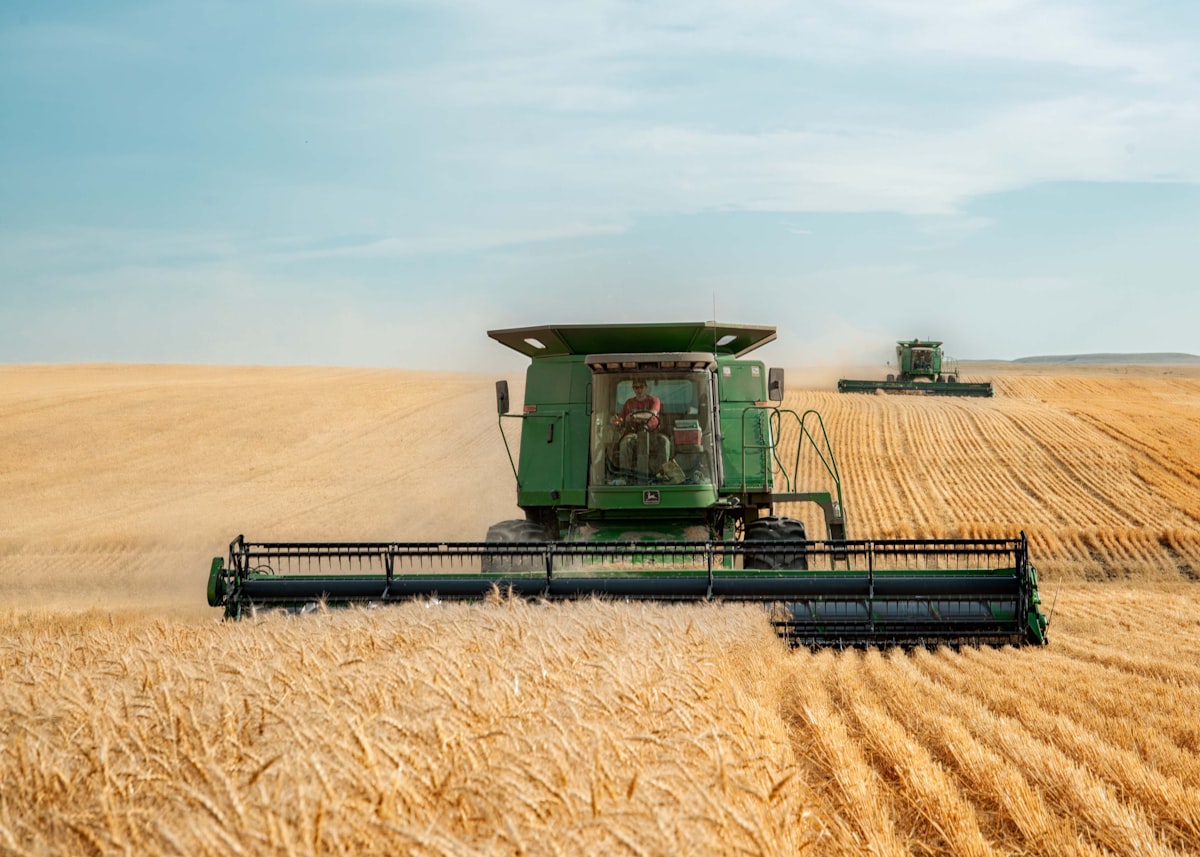
A combine harvester that breaks down mid-harvest doesn’t just cost the price of the part — it costs the days of downtime while a replacement is sourced, at the exact moment weather and crop timing leave no room to spare. A structured pre-harvest maintenance checklist for combine harvesters catches the wear parts that are likely to fail before they do, turning an emergency repair into a planned five-minute swap. This guide walks through what to inspect, what to stock, and how far ahead to start.
Why Pre-Harvest Inspection Matters More Than In-Season Repairs
Every hour a combine sits idle during harvest is an hour of crop exposed to weather risk, and every emergency part order during peak season comes with rushed shipping costs and, often, whatever part is available rather than the one best suited to the machine. A pre-harvest maintenance checklist for combine harvesters shifts that cost structure: parts get inspected and replaced on your schedule, at normal pricing, with time to source the correct OEM-matched component rather than whatever’s on the shelf.
The Core Pre-Harvest Maintenance Checklist for Combine Harvesters
While every machine and crop is different, the following systems should be inspected on every combine harvester before the season starts:
- Cutter bar and knife guards — check for rounded or chipped ledger plates, bent guards, and confirm the knife section slides freely without binding.
- Hammer blades and threshing components — inspect for edge wear, cracks near mounting holes, and confirm the drum is still in balance.
- Concave grates and rasp bars — look for worn bars, damaged grates, and confirm clearances are within spec.
- Feeder house chains and angle bars — check chain tension, look for worn or bent feeder angle bars, and inspect slats for wear.
- Sprockets and drive components — inspect tooth wear, confirm alignment, and check for unusual play in the drive system.
- Belts and bearings — check for cracking, glazing, or looseness, and grease all points per the manufacturer’s schedule.
- Sieves and cleaning shoe components — inspect for damage or excessive wear that could affect grain cleaning quality.
- Hydraulic hoses and fittings — check for cracking, leaks, or soft spots before they fail under full-season pressure.
How Far Ahead to Start Inspections
Most experienced operators and distributors recommend starting the pre-harvest maintenance checklist for combine harvesters four to six weeks before the expected start of harvest. That window gives enough time to source and receive replacement wear parts — especially imported components — without resorting to rush shipping or settling for a lower-quality substitute simply because it’s available locally. Distributors serving multiple customers should build their own replacement-parts inventory even earlier, typically eight to ten weeks out, to avoid being caught short when several customers order at once.
Common Wear Parts That Get Missed
Some components fail more often not because they wear out faster, but because they’re simply overlooked during a quick visual inspection:
- Knife guard ledger plates — wear is often only visible on close inspection, not from a quick glance at the cutter bar.
- Hammer blade mounting bolts — hairline cracks near bolt holes are easy to miss without removing the blade for inspection.
- Feeder chain slats — wear on the underside of slats often goes unnoticed until a chain jumps or jams mid-harvest.
- Sprocket teeth — gradual tooth wear can cause chain skipping that’s mistaken for a tensioning issue rather than a worn sprocket.
Tip: Stock the highest-failure-rate wear parts before you inspect, not after. When the inspection finds a worn part, you swap it immediately instead of starting a new order and losing another week.
Building a Pre-Harvest Parts Stock
Rather than inspecting and then scrambling to order, the more efficient approach to any pre-harvest maintenance checklist for combine harvesters is stocking a base set of the highest-failure-rate wear parts ahead of the inspection itself: knife guards, hammer blades, feeder angle bars, and key bearings. When the inspection turns up a worn part, it’s swapped immediately rather than triggering a new order and another wait. For distributors, this also means keeping safety stock of the fastest-moving SKUs rather than running lean inventory that looks efficient on paper but creates stockouts exactly when demand peaks.
Forged Parts and Pre-Season Reliability
Parts quality plays directly into how much pre-harvest maintenance is actually needed. Forged wear parts — knife guards, hammer blades, feeder angle bars — hold their working geometry and resist cracking far longer than cast alternatives, which means less season-to-season replacement and fewer surprises during inspection. Building a maintenance program around consistently forged, OEM-matched parts reduces both the frequency of the checklist catching problems and the severity of what it finds.
A Simple Pre-Harvest Maintenance Timeline for Combine Harvesters
A practical way to structure the process:
- 8-10 weeks out: Distributors review fast-moving SKUs and place replenishment orders for wear parts.
- 4-6 weeks out: Full machine inspection against the checklist; order any parts not already in stock.
- 2-3 weeks out: Install replacement parts, re-torque and re-grease, run a short test cycle if possible.
- 1 week out: Final visual check of cutter bar, threshing components, and drive system before harvest begins.
Frequently Asked Questions About the Pre-Harvest Maintenance Checklist for Combine Harvesters
How often should hammer blades be checked as part of pre-harvest maintenance?
Every season at minimum, and more frequently for machines running in rocky or high-debris field conditions where impact damage accumulates faster.
Is it worth replacing wear parts that still look functional?
If a part is within a few weeks of its expected wear life and harvest timing leaves no room for a mid-season failure, proactive replacement is usually cheaper than the downtime risk of waiting.
What’s the biggest cause of pre-harvest breakdowns?
Deferred maintenance on components that wear gradually and aren’t part of a routine visual check — feeder chains, sprockets, and hammer blade mounting hardware are common culprits.
Should distributors stock parts before customers request them?
Yes — waiting for customer orders to trigger sourcing typically means an 8-10 week lead time hits exactly when the customer needs the part immediately, which is the outcome a pre-harvest checklist is meant to prevent.
Regional Differences in Pre-Harvest Preparation
What belongs on a pre-harvest maintenance checklist for combine harvesters shifts depending on where the machine operates. In regions with rocky or uneven terrain, cutter bar and knife guard inspection deserves extra attention, since impact damage accumulates faster than in flat, stone-free fields. In humid or high-rainfall regions, hydraulic seals, belts, and corrosion-prone fasteners wear differently than in dry climates, and inspection intervals should reflect that. Distributors supplying multiple regions should build slightly different checklist emphasis for each market rather than applying one generic list everywhere — a cutter bar inspection that’s adequate in flat, dry conditions may not catch the failure modes common in rockier terrain.
Note: Even a simple written log of what was inspected and replaced each season builds a wear-rate history that makes next year’s inspection faster and more targeted.
Documenting the Inspection
A checklist is only as useful as the record it leaves behind. Keeping a simple written or digital log of what was inspected, what was replaced, and when, does two things: it builds a wear-rate history for each machine that makes next season’s inspection faster and more targeted, and it gives distributors visibility into which parts their customers are actually replacing most often — valuable data for stocking decisions. Over two or three seasons, this record typically reveals a small set of high-failure parts specific to that machine, crop, and region, which is far more useful than a generic checklist alone.
What Happens When Pre-Harvest Maintenance Gets Skipped
The cost of skipping pre-harvest inspection rarely shows up as a single large expense — it shows up as a string of smaller disruptions across the season: a knife guard failure that damages the sickle section behind it, a worn sprocket that causes chain skipping and an unplanned half-day repair, a hammer blade crack that turns into a drum imbalance and accelerated bearing wear. Individually, each of these might seem like normal wear and tear. Added up across a season, they typically cost more in downtime and rushed part orders than the inspection and proactive replacement would have cost upfront.
Working With Your Parts Supplier Before the Season Starts
The most effective pre-harvest maintenance checklists are built with input from a parts supplier who understands the specific machine and market, not just a generic template. Sharing your inspection findings with your supplier ahead of ordering lets them flag OEM cross-reference options, confirm current lead times, and recommend steel grades or blade profiles suited to your specific field conditions. This kind of back-and-forth is far easier to have in the calm of a pre-season inspection window than during the scramble of an in-season breakdown, and it’s one of the simplest ways to turn a routine maintenance checklist into a genuinely lower-risk harvest season.
How long does a full pre-harvest inspection take?
For a single combine harvester, a thorough inspection covering the cutter bar, threshing system, feeder house, and drive components typically takes two to four hours, depending on machine size and how much disassembly is needed to inspect wear points like hammer blade mounting bolts closely.
Building this inspection window into the annual calendar, rather than treating it as an occasional task, is what separates operations that rarely see mid-harvest breakdowns from those that treat every failure as a surprise.
A thorough pre-harvest maintenance checklist for combine harvesters starts with reliable parts. Industrial Sales Corporation (ISC) forges and exports knife guards, hammer blades, feeder angle bars, and other combine harvester wear parts from Ludhiana, India, to distributors and importers in 20+ countries. Get in touch to build a pre-harvest parts stock ahead of your next season.