
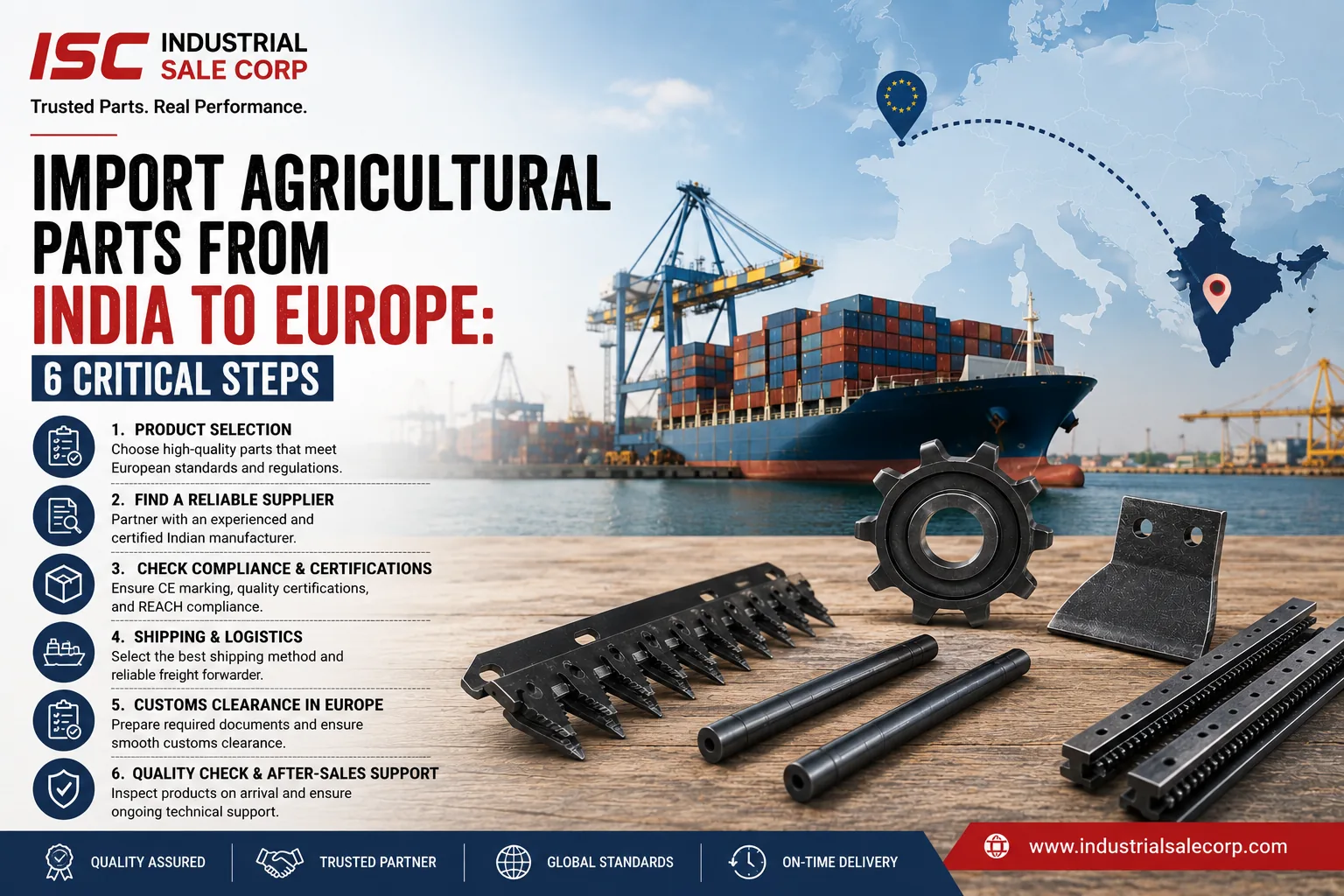
Distributors who import agricultural parts from India to Europe are usually chasing one thing: forged part quality that meets OEM cross-reference standards at a landed cost local sourcing can’t match, even after freight and duty are added in. The math is often what starts the conversation, but what decides whether that math actually pays off is how carefully the six steps below get planned before the first container ships. Skip a step — or rush the compliance paperwork — and the savings from a cheaper unit cost get eaten up fast by demurrage fees, rejected shipments, or a customs hold that sits for weeks.
📋 In This Guide
Why the Math Works in India’s Favor
Labor and raw-material costs in India’s forging clusters run well below Western European equivalents, and that gap survives the trip across the ocean even after freight, duty, and a broker’s fee are added to the invoice. The bigger reason distributors keep coming back, though, is consistency: a forging house that runs the same die set and heat-treat process on every batch produces parts that cross-reference cleanly against OEM part numbers, which is what lets a European distributor sell them with confidence rather than apologize for them.
Buyers who import agricultural parts from India to Europe are chasing a specific combination: forged part quality that meets OEM cross-reference tolerances, at a landed cost that beats sourcing locally. India’s forging sector pairs lower labor and energy costs with a mature export supply chain already built around agricultural machinery parts — rasp bars, knife guards, hammer blades, sprockets.
A Realistic Timeline, Step by Step
| Step | What Happens | Typical Duration |
|---|---|---|
| 1. Vet the supplier | Request material certs and hardness reports, not just a catalogue | 1–2 weeks |
| 2. Sample verification | Confirm OEM cross-reference accuracy before a container order | 2–4 weeks |
| 3. Agree Incoterms | FOB vs CIF shifts cost and risk differently | Days |
| 4. Plan container loading | Balance part weight and mix to maximize utilization | Before production run |
| 5. Prepare documentation | Commercial invoice, packing list, certificate of origin | During production |
| 6. Ocean freight + clearance | Port to port, plus European customs | 3–5 weeks |
First-time buyers who import agricultural parts from India to Europe should build extra buffer into that final step — customs queries and sample verification typically move faster once a documented relationship exists with both the supplier and the customs broker.
CE and Compliance: What Actually Applies
Most forged replacement parts — rasp bars, blades, guards — don’t require CE marking on their own, since they’re wear components for existing certified machinery rather than standalone machinery. Buyers should still confirm this with their own compliance team, particularly for any part with an electrical or safety-critical function.
Buyer tip: Request a trial shipment of high-turnover items like rasp bars for combine harvesters before committing to a full container, especially on a first order.
FAQ
What’s a realistic lead time to import agricultural parts from India to Europe?
Ocean freight typically runs 3–5 weeks port to port depending on the destination, plus manufacturing lead time and customs clearance on both ends.
Do I need a licensed customs broker in Europe?
Most distributors use one — it isn’t always legally required, but it significantly reduces clearance delays and documentation errors.
Can I get samples before committing to a full container order?
Reputable exporters will ship samples or a small trial order so buyers can verify fit and quality before scaling to full container volumes.
Industrial Sales Corporation ships forged agricultural spare parts to distributors across the European Union and works directly with buyers on Incoterms, documentation, and container planning for first-time importers.