
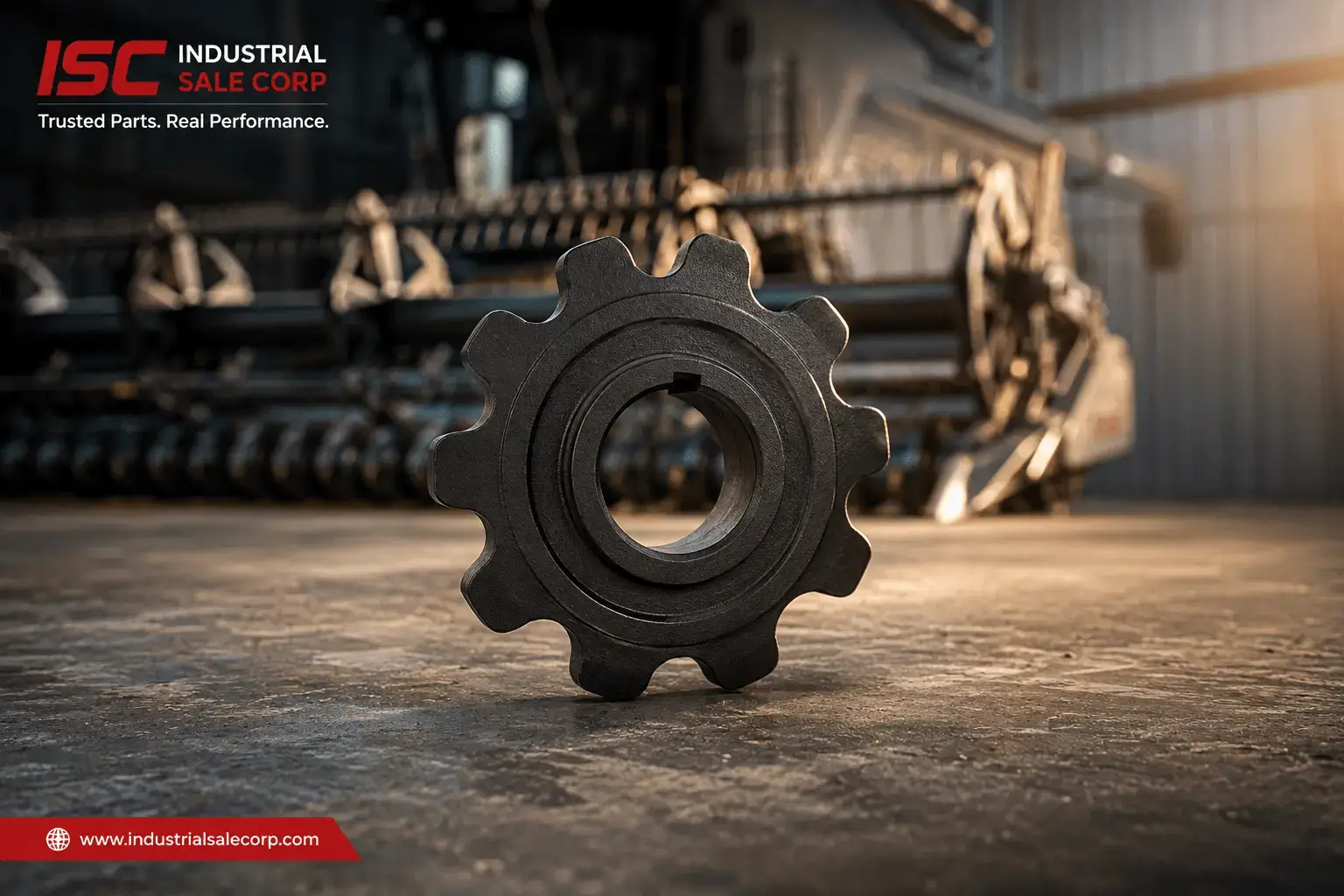
Order the wrong agricultural machinery sprockets once and you’ll pay for it twice — once for the mismatched part, and again for the chain it chews up before anyone notices the fit was off. Here’s the checklist to run before you place that order.
📋 In This Guide
Where Sprockets Sit in the Drivetrain
Agricultural machinery sprockets transmit power through a roller chain to drive augers, elevators, feeder houses, and header drives. Every tooth has to engage the chain roller cleanly — once tooth profile wears past spec, the chain rides high and wear accelerates on both parts at once, not just the sprocket.
Spotting Tooth Wear Early
The clearest tell is a hooked, “shark fin” tooth profile. Run a finger along the tooth face: a sharp hook where the chain roller has worn a groove means the agricultural machinery sprockets in question are past service life, even if they look structurally fine from a distance.
The 5-Point Buying Checklist
| # | Check | Why It Matters |
|---|---|---|
| 1 | Tooth count matches exactly | Even one tooth off changes chain speed and drivetrain ratio |
| 2 | Bore size and keyway match the shaft | Not just the old sprocket’s listed part number |
| 3 | Chain pitch compatibility confirmed | Mismatched pitch causes chain jump under load |
| 4 | Hardness specs provided in writing | Tooth face hardness, not just base material grade |
| 5 | Sprocket and chain ordered together | A new chain on a worn sprocket wears out fast |
Why Hardening Matters More Than Grade
Forged sprockets made from medium-carbon steel and induction-hardened at the tooth face resist wear far longer than stamped or cast alternatives. The hardening leaves the tooth surface hard while the body stays tough enough to absorb shock loads — which matters on machinery that starts and stops under load repeatedly through a harvest day.
Buyer tip: Request material certificates and hardness test results per batch, not just per order. Batch-to-batch consistency is what actually protects a distributor’s warranty position on agricultural machinery sprockets.
Sprockets rarely fail alone — a worn one puts uneven load on surrounding bearings, which is why distributors often see bearing warranty claims rise a season after a supplier ships undersized or poorly hardened parts for a combine harvester drivetrain. Buyers who also stock rasp bars for combine harvesters should consider sourcing both from a supplier who batch-tests hardness consistently across categories.
FAQ
How long do agricultural machinery sprockets typically last?
Service life varies widely by application, but forged, hardened sprockets in combine drivetrains commonly run 1,500–2,500 hours before tooth wear requires replacement.
Can a worn sprocket be repaired instead of replaced?
Tooth profile can’t be reliably restored once hooking begins — replacement is the only fix that avoids accelerating chain wear.
Do sprocket sizes vary between combine harvester brands?
Yes, tooth count, bore, and pitch differ by brand and even by model year, so always cross-reference against the OEM part number.
Industrial Sales Corporation forges agricultural machinery sprockets to OEM cross-reference specs, with batch hardness testing for distributors who need consistent quality across container-volume orders.