
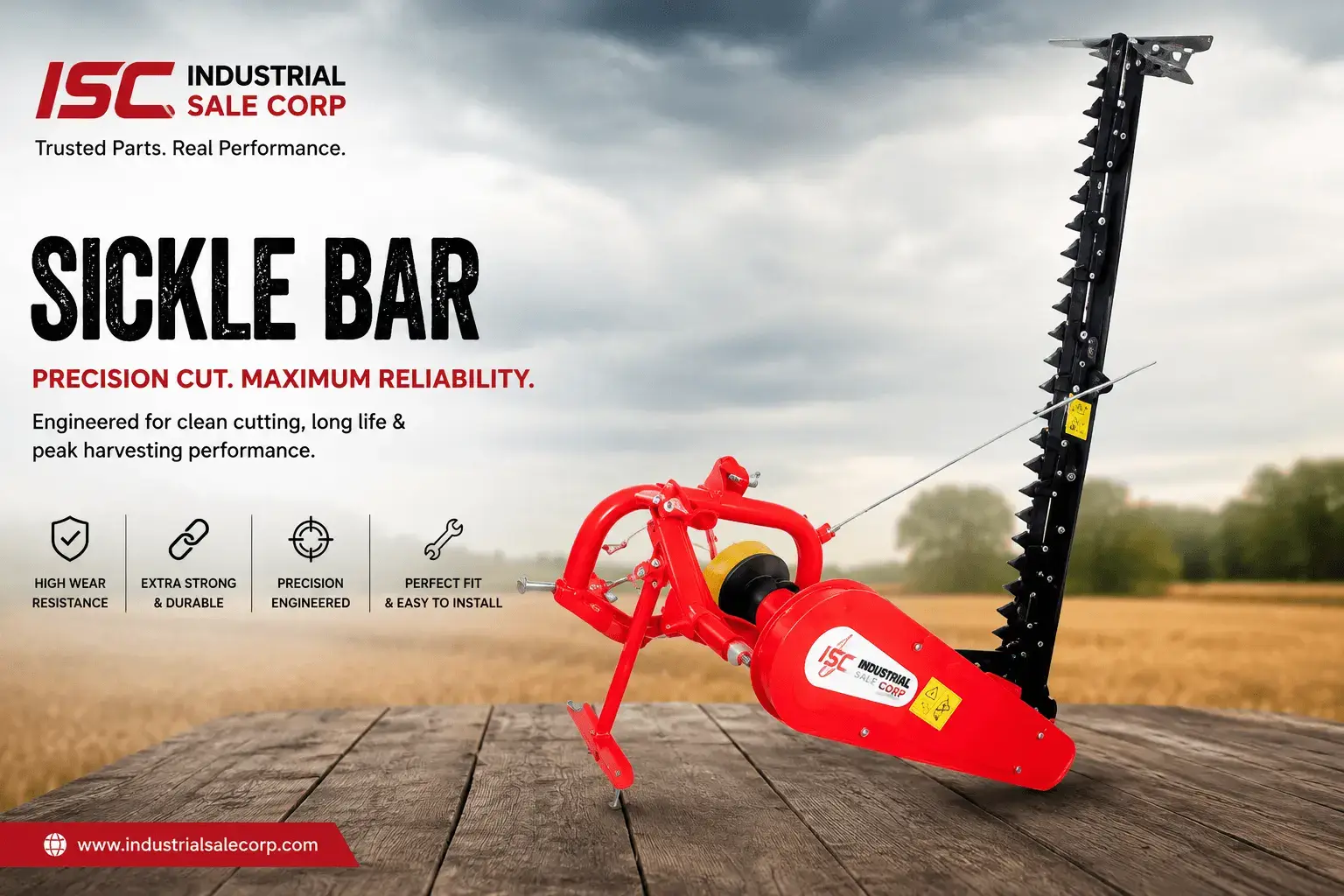
Ask five operators what’s wrong with a rough-cutting mower and you’ll get five different answers — a dull section, a bent guard, a worn ledger plate, a loose pitman. The truth is sickle bar mower parts work as one system, and diagnosing the actual weak link is what separates a five-minute fix from a wasted afternoon.
📋 In This Guide
A Field Guide to Sickle Bar Mower Parts
| Part | Job | Fails As |
|---|---|---|
| Sections | Shears the crop | Chipped or dull serration |
| Knife back | Carries sections through the stroke | Bent, throws off register |
| Guards | Holds crop steady, protects the knife | Worn fingers, knife wanders |
| Ledger plates | Hardened surface the section rides on | Grooved, lets knife flex |
| Pitman arm | Converts rotary drive to linear stroke | Ball joint play, uneven stroke |
Every one of these sickle bar mower parts has to sit within tolerance for the others to work properly — which is why one worn component tends to accelerate wear on the rest of the assembly rather than staying an isolated problem.
Cutting Sections: The Part That Actually Cuts
Sections are the serrated triangles forged or stamped from high-carbon steel and hardened at the cutting edge. A chipped or dulled section stops shearing and starts tearing stalks instead, which shows up in the field as ragged, uneven stubble rather than a clean cut line.
Guards and Ledger Plates
Guards absorb ground contact and debris impact while holding the crop for the section to shear against. Once the ledger plate — the hardened strip inside the guard — wears a groove, the knife starts to flex under load, and that flex is what most operators mistake for “dull sections” when the sections themselves are still fine.
Quick check: Run a finger along the ledger plate. A visible groove means it’s worn past spec, regardless of how the section above it looks.
The Drive Side: Pitman and Wobble Box
The pitman arm and wobble box turn rotary PTO power into the sickle’s back-and-forth stroke. Play in the pitman ball joint unevenly loads sections on one side of the bar, so a mower that cuts clean on one end and rough on the other often has a drive-side problem, not a section problem.
Diagnosing a Rough Cut Before You Order Parts
Before ordering sickle bar mower parts, check register between sections and guards first — a knife running loose in its guides wears every part in the assembly faster, not just the sections you can see are dull. A properly matched, correctly tensioned sickle bar mower assembly cuts cleaner and lasts longer than any single upgraded part on its own, and pairs well with matched rasp bars for combine harvesters if you’re sourcing a full parts kit from one supplier.
FAQ
How do I know if my sickle bar mower parts need replacing?
Ragged cutting, increased vibration, or visible chipping on the sections are the clearest signs. Inspect guards and ledger plates for wear grooves at the same time.
Are sickle sections interchangeable between mower brands?
Section bolt patterns and lengths vary by manufacturer, so always match against the OEM part number or a verified cross-reference.
What steel grade holds an edge longest for sickle sections?
Forged high-carbon steel with a hardened cutting edge outperforms cast or mild-steel sections for edge retention under repeated impact.
Industrial Sales Corporation forges sections, guards, and wear plates to OEM cross-reference specs for export distributors sourcing complete sickle bar mower parts kits.