
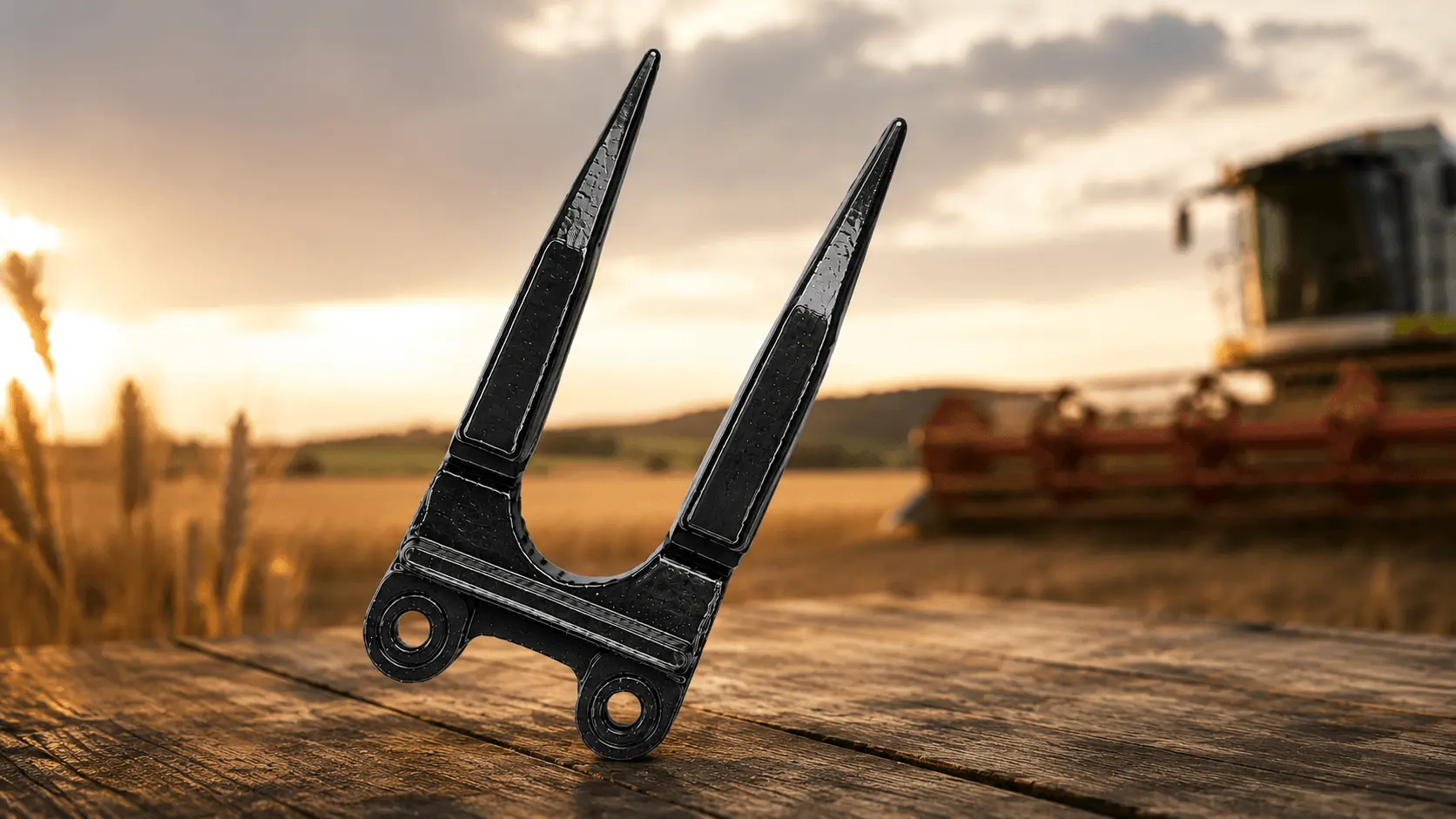
If you’re sourcing knife guards for combine harvesters, mowers, or sickle bar cutting systems, getting the fit wrong costs more than money — it costs downtime during the exact week your customers can’t afford to lose. This guide walks through what actually matters when choosing a knife guard, so you can order with confidence whether you’re buying one container or planning a season’s worth of stock.
What Knife Guards for Combine Harvesters Actually Do
A knife guard sits along the cutter bar and does three jobs at once: it protects the sickle knife section from damage, it holds the crop steady so the blade can shear cleanly instead of tearing, and it keeps the cutting edge properly aligned as the bar vibrates through thousands of strokes per hour. A guard that’s the wrong profile, hardness, or ledger-plate angle will chew through knife sections fast, leave ragged cuts, and increase the load on the whole cutter bar assembly.
Forged vs. Cast: Why It Matters
Most of the cheaper guards on the market are cast. Cast guards are less expensive upfront, but they’re also more brittle — they crack or chip when they hit a stone, a root, or hard-packed soil, and once a guard fails mid-season, the knife section behind it usually fails next. Forged knife guards are formed under pressure rather than poured into a mold, which aligns the grain structure of the steel and makes the part significantly more resistant to impact and fatigue cracking. For combine harvesters running long hours during a tight harvest window, that difference in durability is usually what separates a guard that lasts one season from one that lasts several.
Matching Knife Guards for Combine Harvesters to Your OEM Part Number
Knife guards aren’t universal — the ledger plate angle, the mounting hole spacing, and the overall guard profile all vary by brand and model. Before ordering, buyers should confirm:
- The OEM part number stamped on the guard you’re replacing, or the machine’s model and cutter bar type
- Whether the guard is a top-serrated, standard, or stub-style ledger plate
- Mounting hole spacing and bolt size, since this varies between manufacturers
- Whether you need left-hand, right-hand, or center guards for your bar configuration
A reliable supplier of knife guards for combine harvesters should be able to cross-reference your existing OEM number against their own part catalog rather than asking you to guess from a photo. Knife guards are also a natural addition to a pre-harvest maintenance checklist — checking them alongside hammer blades and feeder chains before the season starts.
What to Ask a Knife Guards for Combine Harvesters Supplier Before You Order
Whether you’re a distributor stocking guards for the season or an importer bringing in a container, a few questions up front save a lot of back-and-forth later:
- What steel grade and heat treatment is used? Hardness that’s too low wears fast; too high, and the guard becomes brittle.
- Is the part forged or cast? Ask directly — some suppliers list “heavy duty” without specifying the process.
- What’s the compatible OEM cross-reference list? A supplier with a documented cross-reference catalog is easier to reorder from consistently.
- What are the minimum order quantities and lead times? Especially important ahead of a harvest season, when shipping delays are costly.
Why Buyers Source Knife Guards From India
India’s forging industry — particularly around Ludhiana, Punjab — has become a significant source of knife guards for combine harvesters and other agricultural cutting parts, supplying distributors and OEM-compatible parts buyers across Europe, the Middle East, and beyond. The combination of established forging expertise, competitive production costs, and parts engineered against OEM specifications makes Indian-forged knife guards a practical alternative to buying only from original equipment manufacturers, without compromising on durability.
Choosing the Right Knife Guards for Combine Harvesters
The right knife guard for your machine comes down to matching the OEM specification, confirming the part is forged rather than cast, and working with a supplier who can document steel grade, cross-references, and consistent quality across orders. Getting this right before harvest season starts is far cheaper than dealing with cutter bar downtime once it does. If you’re also evaluating OEM vs. aftermarket sourcing more broadly, that comparison applies just as much to knife guards as any other wear part.
Common Wear Patterns and What They Tell You
Inspecting a used knife guard before replacement can tell you more than a generic replacement schedule. Rounding on the leading edge of the ledger plate indicates normal abrasive wear and is the most common failure mode — once the ledger plate loses its sharp shearing edge, the guard should be replaced even if it hasn’t cracked. Hairline cracks near the mounting bolt holes usually indicate fatigue from repeated impact and vibration, and a guard showing this pattern should be replaced immediately rather than run to failure, since a cracked guard can fail suddenly and damage the knife section behind it. Uneven wear across the cutter bar — some guards significantly more worn than neighboring ones — often points to a bent or misaligned bar rather than a guard quality issue, and is worth investigating separately before ordering a full replacement set.
Tip: Always replace knife guards in matched sets rather than one at a time — mixing old and new guards on the same bar is one of the most common causes of uneven wear.
Installation Tips
A few practical points that reduce comebacks and premature wear after installation:
- Torque mounting bolts to the manufacturer’s specification — under-torqued guards work loose under vibration, while over-torqued bolts risk cracking the mounting hole.
- Check cutter bar alignment before installing new guards, since a bent bar will cause uneven wear on even a brand-new, correctly specified guard set.
- Replace guards in matched sets where possible rather than mixing old and new, to keep wear patterns consistent across the bar.
- Inspect the knife section itself when replacing guards — a worn knife section paired with new guards will still underperform, since both components work together to create a clean shear.
How Long Do Knife Guards for Combine Harvesters Last?
Wear life varies significantly based on soil conditions, crop type, and operating hours, but as a general guide, forged knife guards in typical field conditions last one to two full seasons before needing replacement, while cast alternatives frequently need replacement within a single season, particularly in rockier or more abrasive soil conditions. Distributors serving markets with harsher field conditions should factor this into inventory planning, stocking replacement sets ahead of the season rather than waiting for in-season reorders during peak demand.
Note: Wear life estimates assume normal field conditions. Rockier or more abrasive soil will shorten replacement intervals — always confirm expected wear life with your supplier for your specific region.
Frequently Asked Questions
Can I replace individual knife guards, or should I replace the whole set?
Individual replacement is fine for isolated damage, such as a single guard cracked by hitting debris. For general wear-related replacement, replacing the full set maintains more even performance across the cutter bar.
Do forged knife guards really outlast cast ones by that much?
In most field conditions, yes — the difference isn’t marginal. Forged guards resist the chipping and cracking that shortens cast guard life, particularly in fields with stones or hard-packed soil.
How do I know if a supplier’s knife guards are actually forged?
Ask directly and request documentation of their manufacturing process. A reputable forging manufacturer will be able to describe their process specifically, rather than using “heavy duty” as a substitute for a real answer.
What information should I send when requesting a quote?
Ideally, your existing OEM part number. If you don’t have it, accurate measurements of the guard profile, mounting hole spacing, and a photo of the ledger plate style will let a supplier cross-reference accurately.
Choosing the right knife guard ultimately comes down to three things: confirming the part matches your OEM specification, verifying it’s genuinely forged rather than cast, and working with a supplier who documents steel grade and maintains consistent quality across orders. Getting this right before harvest season starts is far cheaper than dealing with cutter bar downtime once it does.
Regional Considerations When Sourcing Knife Guards
Field conditions vary significantly by region, and the right knife guard specification often varies with them. Operations in rocky or hard-packed soil see faster edge wear and higher rates of chipping, which favors a tougher steel grade that resists cracking even at a slight cost to maximum hardness. Wetter, heavier-soil regions put different stress on the mounting hardware and ledger plate. Distributors importing knife guards for a specific market should share field conditions with their supplier rather than ordering to a generic spec sheet, since a guard tuned for dry, stone-free fields in one country can wear unpredictably fast in a rockier market elsewhere. ISC’s export team regularly adjusts steel grade recommendations based on the destination market’s typical field conditions, which is one of the practical advantages of working directly with a forging manufacturer rather than a generic parts trader.
The buyers who get the most consistent results are the ones who treat this as an ongoing conversation with their supplier rather than a one-time spec sheet exchange — field conditions and crop patterns shift over a few seasons, and a good manufacturer adjusts recommendations accordingly rather than shipping the same generic spec year after year.
That kind of ongoing feedback loop, more than any single spec sheet, is what keeps a cutter bar running reliably season after season.
If you’re evaluating suppliers right now, treat that conversation as the real test — not the price on the first quote.
Industrial Sales Corporation (ISC) forges and exports knife guards and other combine harvester spare parts from Ludhiana, India, compatible with major OEM brands, to distributors and importers in 20+ countries. Get in touch for OEM cross-reference details and current lead times.