
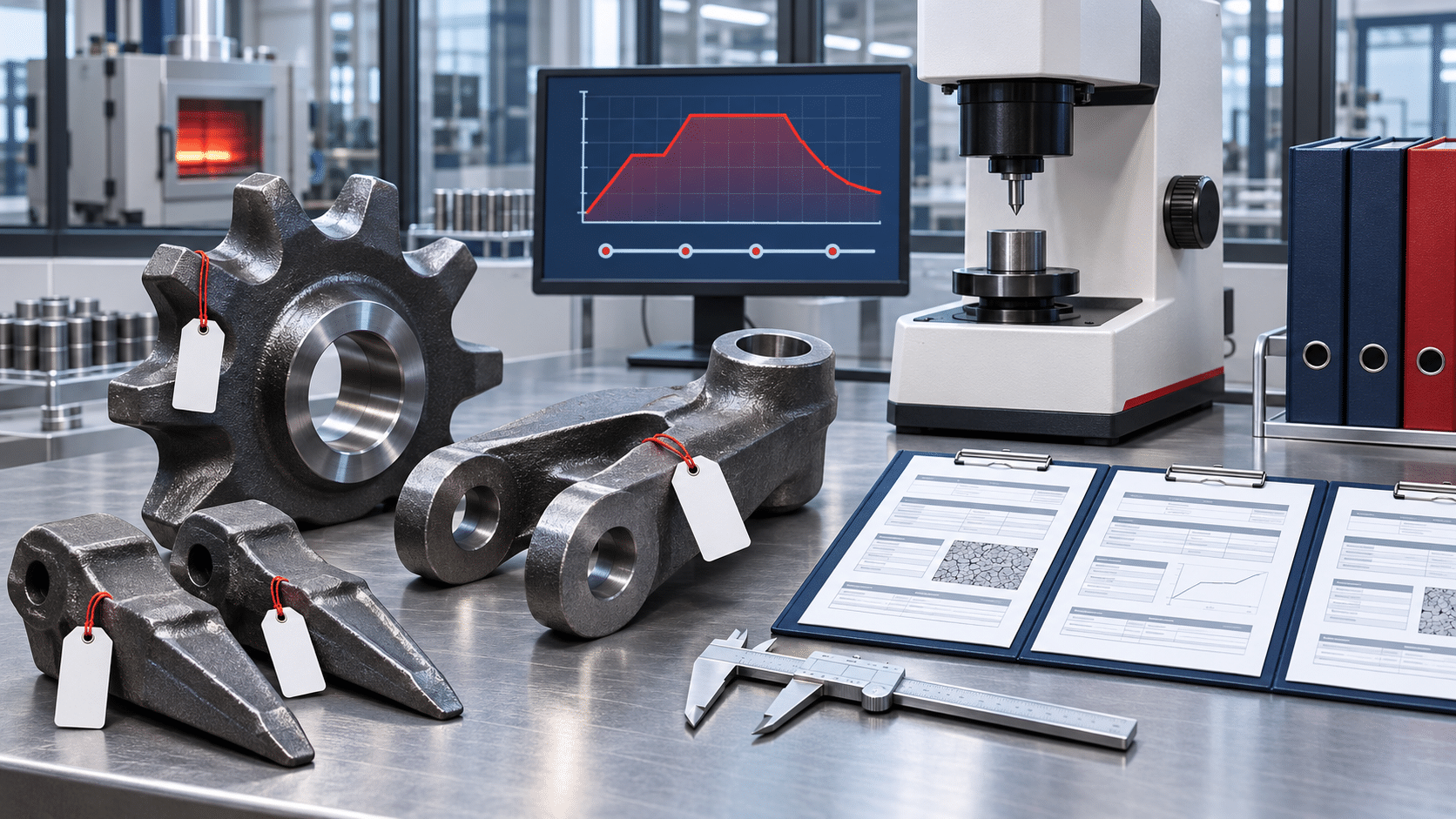
Material test certificates agricultural parts requirements should be written into the RFQ before production. A certificate is useful only when it identifies the material, batch and test results that can be linked to the parts received.
Quick answer
Specify the exact document and evidence required, the applicable material standard and edition, the tests to be reported, acceptance limits, language and traceability method. Do not request “certificate required” without defining what the buyer must be able to verify.
Why forged parts need controlled evidence
Forged agricultural components can be affected by steel chemistry, forming practice, heat treatment, hardness and machining. Two parts with similar dimensions may perform differently in cyclic, impact or wear service. Documentation does not replace inspection, but it connects purchase requirements to the production batch and gives the buyer evidence for review.
Build a practical document pack
Material identity
Grade, heat or cast number, chemical results and the referenced material specification.
Process evidence
Heat-treatment cycle reference, required mechanical properties, hardness method and results where applicable.
Part traceability
Batch or lot marking that connects finished components, inspection records and the supplied certificate.
What the RFQ should state
- Controlled drawing number and revision
- Material grade and governing specification, including edition when relevant
- Required inspection document type, such as an EN 10204 category when contractually applicable
- Chemical, mechanical, hardness or other results to be reported
- Acceptance criteria and any approved test laboratory requirement
- Part, package and document traceability method
- Timing for review: before production, before shipment or with the final dispatch pack
Review checklist on receipt
| Check | Buyer question |
|---|---|
| Identification | Do supplier, product, material and batch references match the order? |
| Results | Are actual results shown and within the specified limits? |
| Authority | Is the document validated by the person or body required by the contract? |
| Traceability | Can the received parts be linked to the certificate without guesswork? |
About EN 10204 references
European buyers commonly use EN 10204 terminology for inspection documents. The precise category, edition and applicability should be stated in the contract and confirmed by a qualified technical specialist. A buyer should not assume that every document called “3.1” contains the tests needed for the component; the underlying product specification and purchase requirements still control which results matter.
Red flags
Watch for certificates with no heat number, copied generic values, units that do not match the specification, altered files, unexplained handwritten changes or batch references that cannot be found on packaging or parts. Resolve discrepancies before installation. For critical service, consider independent verification under an agreed inspection plan.
Frequently asked questions
Is a certificate the same as product approval?
No. It is one source of evidence and must be reviewed with drawings, inspection results and the intended application.
Should hardness be on every report?
Only when the drawing, material or process requirement makes it relevant. State the method, location and range expected.
Can a buyer request original mill evidence?
Yes, if this is agreed before ordering and traceability through processing is maintained. Define what original and traceable mean for the contract.
Prepare a quality-focused RFQ
Send the drawing, material, application, quantity and required inspection evidence to Industrial Sales Corporation.
This article provides general procurement information, not engineering, conformity or legal advice. Buyers must validate the required standards, document types and acceptance limits for the actual component and destination. Industrial Sales Corporation is an independent aftermarket supplier.