
A dependable rasp bars supplier Europe distributors can count on is harder to find than it should be. If you’re sourcing combine harvester wear parts for the European market, you’ve probably noticed the same problem every season: local and EU-based rasp bar suppliers either carry long lead times, charge a premium for forged parts, or simply don’t stock the specific profile your customers need. For distributors and importers supplying grain and cereal farms across Germany, France, Poland, and the wider EU, finding a reliable source often means looking beyond Europe’s own manufacturing base — toward established forging exporters like India, where the cost structure, raw material access, and manufacturing capacity are built specifically for this category of wear part.
This guide is built for anyone evaluating a rasp bars supplier Europe distributors can rely on, covering what rasp bars actually do, why they wear out, what to check before choosing a supplier, and what shipping a container of forged rasp bars from India to a European port actually looks like in practice.
What Are Rasp Bars and Why They Wear Out
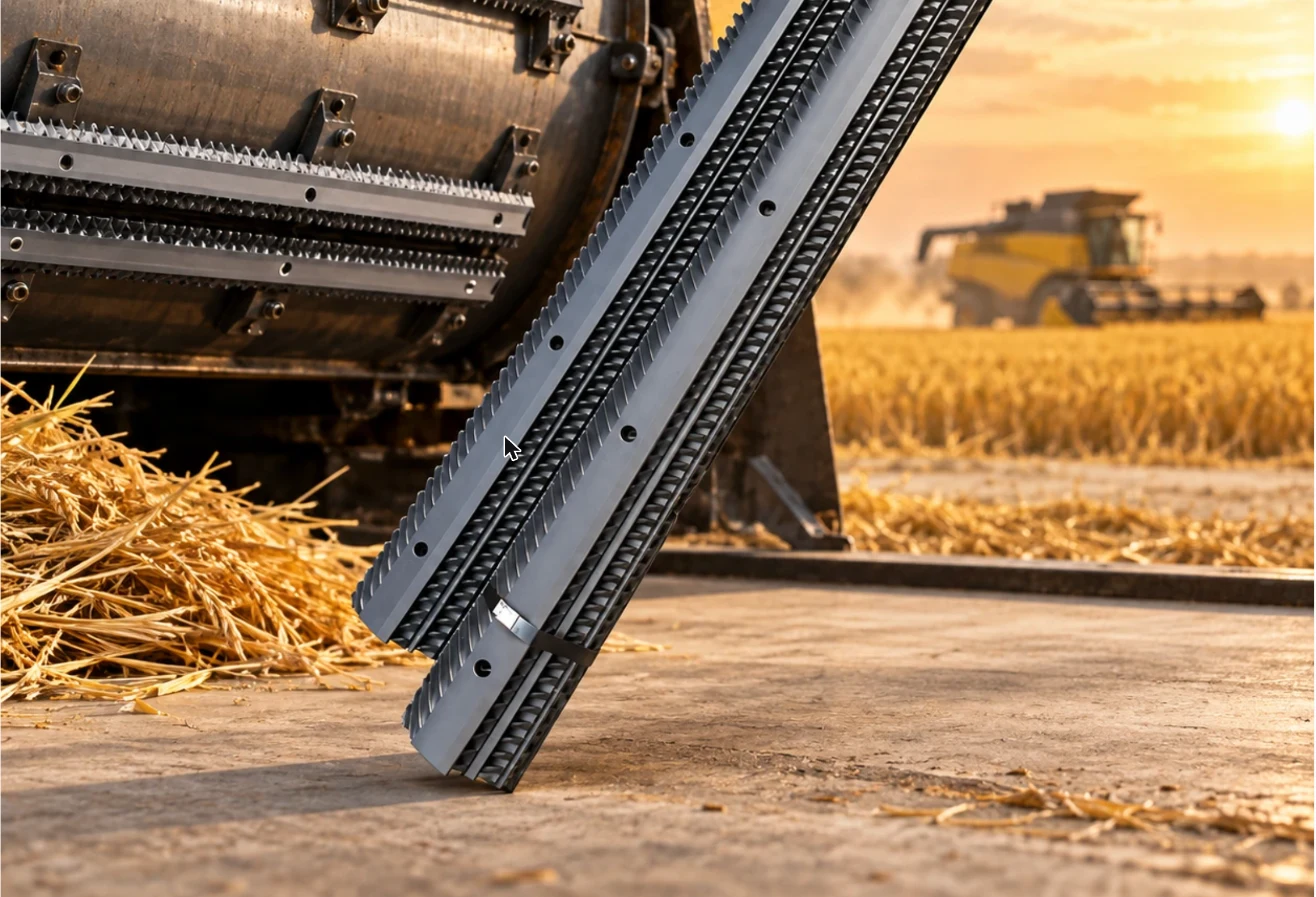
Rasp bars are the ridged steel bars mounted around a combine harvester’s threshing drum (or rotor, on axial-flow machines). As crop material passes through the drum, the rasp bars grip and rub the stalks against the concave, separating grain from straw. That grip-and-rub action is exactly what wears the bars down over a harvest season — the ridges flatten, the leading edge rounds off, and threshing efficiency drops even though the machine looks fine from the outside.
Worn rasp bars don’t just reduce output. They increase grain loss, raise fuel consumption per tonne threshed, and put more strain on the drum bearings as the imbalance from uneven wear compounds. Most commercial operations replace rasp bars every one to three seasons depending on crop type, moisture content, and stone content in the field — which is why a dependable, repeat-order supplier relationship matters more here than a one-off purchase.
Choosing a Rasp Bars Supplier Europe Distributors Can Trust
Three things are pushing European distributors to look at Indian forging exporters for this specific part category:
- Cost per unit. Forged steel parts are labor- and energy-intensive to produce. India’s forging sector — concentrated in hubs like Ludhiana, Punjab — operates at a cost base that’s structurally lower than most EU manufacturing, without compromising on the steel grade or hardness the part needs.
- Capacity and lead time for bulk orders. A distributor restocking ahead of harvest season needs a supplier who can commit to a container-load order on a fixed timeline. Smaller EU workshops producing rasp bars as one of many product lines often can’t prioritize a large export order the way a dedicated forging exporter can.
- OEM cross-reference flexibility. Buyers need rasp bars that fit a specific drum profile — major European combine brands all use slightly different bar geometries. A supplier experienced in cross-referencing OEM part numbers to their own forged equivalents removes the guesswork from the order.
What to Check Before Choosing an Indian Rasp Bar Supplier
Not every rasp bars supplier Europe distributors come across is offering the same quality. Before committing to a supplier, European buyers should verify the following:
- Steel grade and hardness. Ask for the exact steel specification (commonly boron or alloy steel in the 45-55 HRC range for rasp bars) and request a material test certificate, not just a verbal assurance.
- Forging process, not casting. Forged rasp bars have a denser grain structure than cast ones, which means better wear resistance and less risk of cracking under repeated impact. A supplier should be able to explain and show their forging process, not just their finishing.
- OEM cross-reference documentation. A credible supplier maintains a cross-reference chart mapping their part numbers to the OEM numbers for major European combine brands, so you can order with confidence that the bar will actually fit.
- CE compliance and export documentation. While rasp bars themselves aren’t typically CE-marked as standalone components, a supplier exporting regularly to the EU should understand EU import documentation, HS codes, and any applicable machinery-directive paperwork your customs broker will ask for.
- Sample order before bulk commitment. Any established exporter should be willing to ship a small sample batch before you place a full container order — this is the single best way to verify quality before committing working capital.
Shipping and Lead Times from India to Europe
For any rasp bars supplier Europe distributors are vetting, lead time is as important as price. A typical India-to-Europe shipment for forged agricultural parts looks like this:
- Production time: 15–25 days for a standard bulk order, depending on quantity and whether the profile requires new tooling.
- Port of origin: Most Punjab-based forging exporters route through Mumbai (Nhava Sheva) or, for North India manufacturers, via inland container depots connecting to the same ports.
- Transit time by sea: 20–30 days to major European ports — Rotterdam, Hamburg, and Antwerp are the most common entry points for agricultural machinery parts shipments.
- Total lead time: Most buyers should plan for 5–7 weeks door-to-door from order confirmation to arrival at a European warehouse, factoring in customs clearance.
Practical tip: if you’re restocking for a specific harvest season, place your order at least 8–10 weeks before you need stock on the shelf — this buffers against seasonal port congestion, which is common in the months leading into the European harvest.
Port congestion patterns are tracked publicly — the Port of Rotterdam, Europe’s largest container port, publishes updates that are a useful reference point for any rasp bars supplier Europe distributors are evaluating for consistent shipping performance.
How ISC Manufactures Rasp Bars
As a rasp bars supplier Europe distributors have worked with since the 1980s, Industrial Sales Corporation (ISC) forges rasp bars at its Ludhiana, Punjab facility using hot-forged alloy steel, finished to match the wear-resistance profile combine harvester drums need under continuous threshing load. Every batch is produced against documented steel specifications, and parts are cross-referenced against the major OEM part numbers European buyers typically request, so distributors can order by their existing part number and get a direct forged equivalent.
ISC has been manufacturing and exporting agricultural forged parts since 1988, with an established export process covering documentation, container loading, and freight coordination for European-bound shipments — removing the logistics uncertainty that’s often the biggest barrier for a first-time India-sourced order.
Cost Advantage: What European Buyers Typically Save
While exact savings depend on volume and the specific OEM cross-reference, distributors sourcing forged rasp bars directly from an Indian manufacturer rather than through a European intermediary typically see meaningful landed-cost savings even after freight, duty, and customs clearance are factored in — because the per-unit manufacturing cost differential is large enough to absorb those additional costs and still undercut EU-sourced or re-distributed pricing. For a high-turnover wear part like rasp bars, that difference compounds significantly across a full season’s restocking volume.
Red Flags to Watch For When Evaluating Suppliers
Because every rasp bars supplier Europe distributors vet looks similar on paper, it’s easy for buyers to underestimate how much the manufacturing quality varies between exporters. A few warning signs are worth taking seriously before placing a bulk order:
- No willingness to share a material test certificate. A genuine manufacturer tests every production batch and keeps records — if a supplier is vague about this, treat it as a signal to look elsewhere.
- Unusually fast quoted lead times with no production detail. Forging and heat-treating steel takes time. A supplier promising a full container in under two weeks, with no explanation of existing stock versus made-to-order, is worth questioning closely.
- No cross-reference chart, only “it should fit.” Ambiguity about exact fitment is one of the most common reasons buyers end up with a container of parts that don’t match their customers’ machines.
- Reluctance to send a small sample first. This is the lowest-risk way to validate a new supplier relationship, and any exporter confident in their own quality should welcome it rather than push straight to a full order.
These checks take an extra week or two upfront, but they’re far cheaper than discovering a fitment or hardness problem after a container has already cleared customs and been distributed to your own customers.
This post is part of ISC’s ongoing content covering combine harvester wear parts for international buyers — see the full blog archive for related guides, including the original Rasp Bars replacement signs guide and the Import Agricultural Parts from India to Europe guide for the broader logistics process.
Frequently Asked Questions
How do I know which rasp bar fits my combine harvester?
Most suppliers maintain an OEM cross-reference chart. Provide your machine’s make, model, and the OEM part number from your current (worn) rasp bar, and a supplier experienced in European brands should be able to confirm the matching forged equivalent within a day.
Are forged rasp bars better than cast ones?
Yes, for this application. Forging compresses and aligns the steel’s grain structure, giving the part better impact resistance and a longer working life under the repeated stress of threshing — which is why most OEM rasp bars are forged rather than cast.
What’s a realistic minimum order quantity for importing from India?
This varies by supplier, but most exporters can accommodate a sample order of a few dozen pieces before scaling to a full container load, which typically holds several thousand units depending on the bar profile.
Do I need to worry about CE marking for rasp bars specifically?
Rasp bars as a standalone replacement wear part are generally not subject to CE marking requirements themselves (CE marking applies to complete machinery, not individual spare parts), but your supplier should still understand standard EU import documentation and HS code classification for smooth customs clearance.
How often should rasp bars be replaced?
Typically every one to three harvest seasons, depending on crop type, field stone content, and threshing hours — inspect for flattened ridges or rounded leading edges at the start of each season.
Get a Quote
As a trusted rasp bars supplier Europe importers return to season after season, ISC supplies forged rasp bars to distributors and importers across Europe, with OEM cross-reference support and documented steel specifications for every batch. Get in touch for a quote or browse the full RASP Bars product range.