
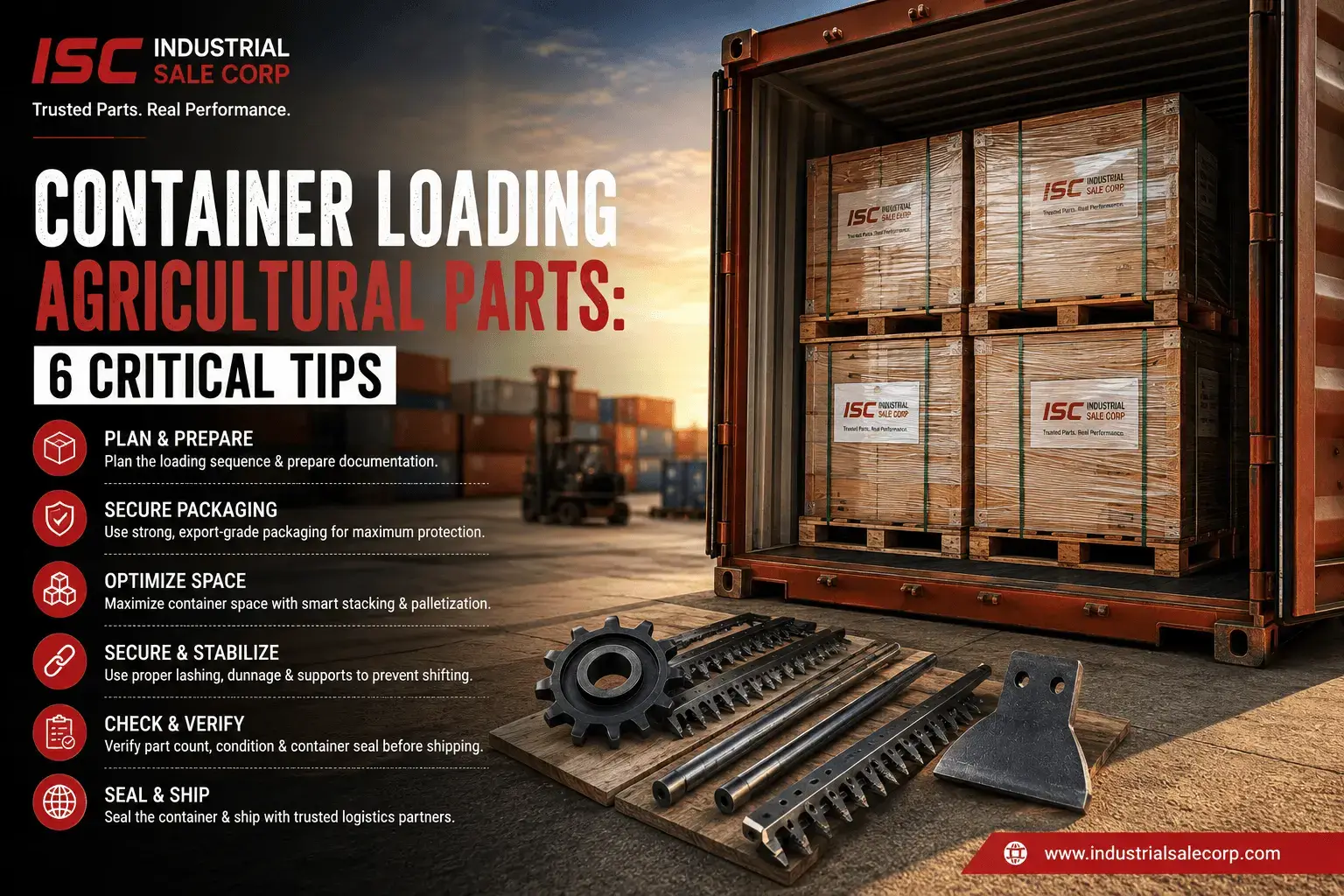
Forged steel is dense enough that a standard container will hit its weight limit long before it fills up on space — which means container loading agricultural parts well is really an exercise in planning around weight first, not volume. Get the order wrong and a distributor either pays for wasted volume or risks damaged parts on arrival.
📋 In This Guide
Weight vs Volume: Know This Before You Plan Anything Else
| Container | Typical Weight Limit | Reality for Forged Parts |
|---|---|---|
| 20-foot standard | ~28 metric tons | Hits weight limit well before cubic capacity fills |
| 40-foot standard | ~26–28 metric tons | More volume, similar weight ceiling — plan mixed loads |
Container loading agricultural parts means calculating weight before volume, then filling remaining space with lighter mixed items rather than the reverse.
6 Tips That Actually Move the Needle
- Calculate weight before volume — forged steel parts hit container weight limits well before cubic capacity fills up.
- Palletize wherever possible to speed up both loading and destination unloading.
- Separate heavy and light SKUs in the stuffing plan so weight distributes evenly across the container floor.
- Use edge protectors and dunnage to stop crates shifting during ocean transit.
- Photograph the load before sealing for insurance and dispute documentation.
- Confirm the destination port’s crane and forklift capacity matches the container’s actual gross weight.
None of these six tips require special equipment or a bigger budget — they’re mostly a matter of sequencing the work correctly before the container arrives at the dock. Distributors who build a simple checklist around weight-first planning, palletizing, and photo documentation tend to see damage claims and port disputes drop noticeably within the first two or three shipments.
Packing Materials That Prevent Transit Damage
Forged agricultural parts don’t need elaborate packaging to survive transit, but they do need protection from moisture and impact. Wooden crates with moisture barrier lining, corner bracing, and clear weight labeling reduce both handling damage and customs delays caused by unclear cargo documentation.
Buyer tip: Ask your supplier for a combined stuffing plan when ordering mixed parts — like agricultural machinery sprockets alongside forged blades — since mixed-part containers need more careful weight balancing than single-product loads.
Working With Freight Forwarders
Most exporters handle container loading agricultural parts through a freight forwarder who understands both the weight profile of forged steel and the destination port’s handling equipment. A forwarder experienced with containerized industrial cargo can flag weight-limit issues before the container leaves the factory rather than after it reaches port.
FAQ
What’s the typical weight limit for container loading agricultural parts in a 20-foot container?
Standard 20-foot containers are typically limited to around 28 metric tons of cargo, though this varies by carrier and destination road regulations.
Should agricultural spare parts be palletized or loose-loaded?
Palletizing speeds up handling at both ends and reduces damage risk, though it does slightly reduce usable container volume compared to loose loading.
Who’s responsible for container loading — the exporter or the freight forwarder?
This depends on the agreed Incoterm; under FOB terms the exporter typically handles loading, while the buyer’s forwarder manages onward logistics.
Industrial Sales Corporation plans container loads around actual part weight and mix for every export order, helping distributors avoid the wasted volume and weight-limit surprises that come from generic container planning.